How We Use Google Maps to “Pin” Our Trips
We’ve been using this “pinning” process throughout our travels for awhile now. I remember a time before we started doing it and sometimes it felt like we lost time on our trip backtracking from one location to another. The first trip Ashtyn and I took together was a road trip from our hometown (Fort Wayne, IN) to Orlando, Florida as it was one of Ashtyn’s dreams to visit the Harry Potter section of Universal Studios. We stayed in Hyatt Place near Orlando airport, and we were there for about 5 days. On our first day there, we spent it all at Universal Studios and that was conveniently only about 25 minutes away from our lodging. One of the only other things we had planned was a day trip to the Cocoa Beach area.
Aside from those two excursions though, it felt like we kept driving seemingly aimlessly. Some mornings we'd start on the west side of town. By afternoon we were across town for a guided tour. Dinner pulled us back west. Then we'd drive east again just to get back to the hotel. We were everywhere and nowhere efficiently. Although we had an absolute blast on the trip, we couldn’t help but reflect and think that we might have lost some time by backtracking from one event to the next.
We had a couple of pins prepped for that first trip, but seeing how much time we lost backtracking made clear that having a few pins wasn't enough, we needed a system to avoid this in the future. That trip planted the seed for the process we use on every trip now.
Here's exactly how we do it.
Step One: Start With Research, Not a Map
Before a single pin gets dropped, we spend time just learning about where we're headed. This looks different depending on the trip, but usually it's some combination of:
General web searches for "best things to do in ___"
Scrolling through travel blogs (hi, if you're reading this!)
Falling down a YouTube rabbit hole of vlogs from people who've been there
Texting friends who've visited to ask what they loved, and what they'd skip
We're not trying to build an itinerary at this stage. We're just trying to get a feel for the destination and start collecting ideas.
Step Two: Build a Big, Messy List
Once we've done enough digging, we start compiling everything that catches our interest. Museums we're only mildly curious about, restaurants that looked good in one Instagram post, a hiking trail a friend mentioned in passing, it all goes on the list.
We usually keep this list in the Notes app on our phones since it's always with us, but the tool doesn't really matter. A notebook works just as well. The goal at this point isn't to be selective, it's to be exhaustive. You can always cut things later, but it's harder to remember an idea you never wrote down in the first place.
Step Three: Turn That List Into Pins
This is where the real planning starts. Once we have a solid list going and we're ready to start shaping an actual itinerary, we open Google Maps and get to work.
Here's our process:
Create a new list in Google Maps (we name it after the destination, like "Lisbon 2026," for example, so it's easy to find again later)
Search for each place on our list, one by one
Save each one to that new list
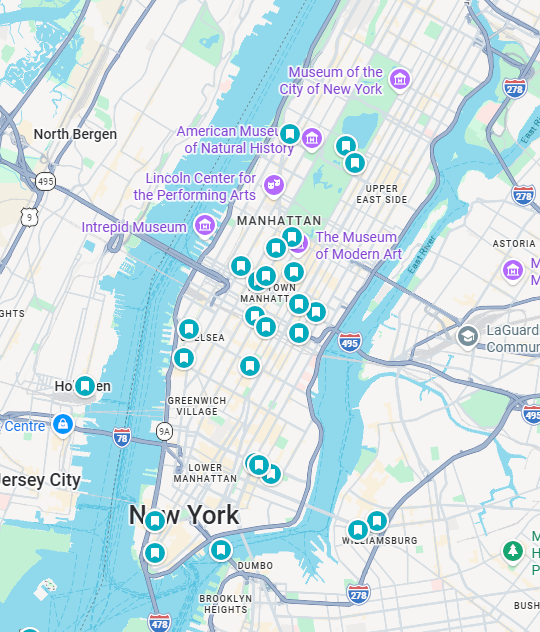
It's a little tedious at first, especially if your list is long, but it pays off fast. Once everything is saved, you can zoom out on the map and see, at a glance, exactly where your desired places are in relation to each other. That single view tells you more about how your trip will actually flow than any blog post or guidebook ever could.
Why This Step Changes Everything
Dropping pins isn't just about having a visual list, it's about the planning problems it surfaces that you'd otherwise only discover the hard way during the middle of your trip.
It shows you what's actually walkable. Two attractions that sound close together based on their neighborhood names might turn out to be a 45-minute walk apart. On the flip side, things you assumed would require a car might end up being a quick stroll.
It flags when you need a plan B for transportation. Sometimes a pin will land somewhere clearly outside the cluster of everything else, maybe it's a day trip distance away. That's usually our cue to start researching a rental car, a guided tour with transportation included, or at minimum, a longer travel day than we'd originally planned. Better to catch that while you're still planning from your couch than to realize it the morning you were hoping to squeeze in three activities. A good example of this is when we were planning a trip to Edinburgh, Scotland. We are fans of a good brew and hoped to visit BrewDog Brewery headquarters. We were under the impression that headquarters was in Edinburgh and that we could walk or use a public transportation system since we were staying near the city center. Fortunately, since we dropped some pins, we found out that the location we wanted to visit was a couple hours away. This helped us form a different plan that avoided renting a vehicle. Because of this, we did not make it to BrewDog HQ during our trip to Scotland, but next time we think it will be a must-see!
It helps you gauge public transit needs. If a city has a solid public transportation system, seeing your pins laid out makes it much easier to figure out whether you'll be hopping on and off constantly (in which case, a day pass probably makes sense) or only need a ride here and there (where single tickets might be the better deal). We've saved real money this way, there's nothing worse than buying a multi-day transit pass and realizing halfway through the trip that everything you actually wanted to do was within walking distance the whole time.
None of this is stuff you'd necessarily think to research on its own. It's the kind of thing that only becomes obvious once you can actually see your trip laid out geographically, rather than reading a list of addresses or neighborhood names that mean nothing to you yet.
Planning in Clusters, Not Checklists
Once all our pins are down, we don't just work through them in whatever order they happened to get added. Instead, we like to zoom out and look for natural clusters and spots where a handful of pins are all sitting close together.
Our family loves exploring cities on foot as much as possible, so this step matters a lot to us. We'll mentally (sometimes literally) circle regions on the map where several of our saved spots overlap, and we build individual days around those clusters. If we've got four pins sitting within a few blocks of each other in one neighborhood, that instantly becomes "Day 2." A cluster on the opposite side of town becomes another day entirely. It sounds almost too simple, but it turns what could be a scattered, backtracking mess of a trip into something that flows naturally and it cuts down dramatically on wasted time getting from one place to the next.
This approach has an added bonus when you're traveling with kids: shorter distances between stops mean fewer meltdowns, fewer "are we there yet" moments, and more built-in flexibility if someone needs a break. A cluster-based day can absorb a slow morning or an extra stop for ice cream a lot more easily than a day built around three distant and tightly-scheduled destinations.
Don't Forget to Pin Your Meals
Here's a step that's easy to overlook but has saved us more times than we can count: pinning restaurants.
While we're doing our research, we also drop pins for any local restaurants that catch our eye, whether that's from a "best local eats" article, a recommendation from a friend, or just scrolling through reviews. We're not committing any of them in advance, unless it appears that a reservation is warranted (in those cases, we do commit and plan around it). We're just building a running list of solid options.
The payoff comes later, usually mid-afternoon on a day full of walking, when someone in the family suddenly announces they're starving. Instead of standing on a street corner scrolling through review sites trying to make a decision on the spot, we just pull up the map and see what we already pinned nearby. It takes the guesswork and the hangry decision-making completely out of the equation. The last thing you want to do when you’re hangry is fall for an over-priced tourist trap of a restaurant when you could have had a well-reviewed and affordable meal while supporting a local institution.
Quick Tips If You're Trying This for the First Time
If all of this has you ready to give it a shot on your own next trip, here are a few small things we've learned along the way that make the process even smoother:
Name your lists clearly and consistently. "Rome 2026" is a lot easier to find six months later than "Trip List 3."
Don't be afraid to over-pin. It costs nothing to save a place you're only half-interested in. You can always ignore it later, but you can't un-forget an idea you never wrote down.
Use different colors or icons for different categories if your version of Maps supports it, restaurants, activities, and "maybe" spots are easier to scan at a glance when they're visually distinct.
Revisit your pins a day or two before you leave. Plans change, new recommendations come in, and it only takes a few minutes to update your list before you go.
Keep the list saved even after the trip. If you loved a spot but didn't get to everything, it's a built-in head start for a future visit.
The Bottom Line
At its core, this method isn't complicated. It's really just: research, list, pin, zoom out, and cluster. But that simple process has completely changed how smoothly our trips run. It turns a huge pile of scattered ideas into something visual and actionable and it means most of our trip-planning surprises happen at home on a laptop, not on day three of the actual trip.
If you haven't tried planning this way before, give it a shot on your next trip. Start a list, start dropping pins, and see how much clearer your itinerary becomes once you can actually see it laid out in front of you.